

Worry stones may be small, but their color can hold powerful personal meaning. Many people choose a worry stone not only for its smooth, calming texture, but also for the emotional symbolism of its color—whether that means peace, grounding, healing, clarity, or confidence.
This guide walks you through the most common worry stone color meanings, how different colors are traditionally interpreted, and how to choose the right one based on your intention, mood, or daily support needs. Think of it as a practical color guide for calm, comfort, and mindful rituals.
Table of Contents
- 1. What Is a Worry Stone?
- 2. Why Worry Stone Color Meanings Matter
- 3. Worry Stone Color Meanings at a Glance
- 4. Blue Worry Stone Meaning
- 5. Green Worry Stone Meaning
- 6. Pink Worry Stone Meaning
- 7. Purple Worry Stone Meaning
- 8. White or Clear Worry Stone Meaning
- 9. Black Worry Stone Meaning
- 10. Red Worry Stone Meaning
- 11. Yellow Worry Stone Meaning
- 12. Orange Worry Stone Meaning
- 13. Brown Worry Stone Meaning
- 14. How to Choose the Right Worry Stone Color
- 15. Best Worry Stone Colors for Different Intentions
- 16. Are Worry Stone Color Meanings Spiritual or Symbolic?
- 17. Worry Stones as Meaningful Gifts
- 18. FAQ About Worry Stone Color Meanings
- Conclusion: Choosing by Meaning and Feeling

1. What Is a Worry Stone?
A worry stone is a smooth, polished stone designed to fit comfortably in the hand. Many have a small thumb-shaped indentation that makes them easy to rub during moments of stress, reflection, or anxiety. That repetitive motion can help create a sense of calm and grounding.
People often use worry stones for mindfulness, emotional comfort, meditation, and intention-setting. Some choose them for the type of crystal, while others are drawn first to the color. Both approaches are common, and both can feel deeply personal.
- Common uses: Stress relief, grounding, emotional support, and mindful focus.
- Why people carry them: They are small, tactile, portable, and easy to use throughout the day.
- Why color matters: The color often becomes part of the emotional meaning of the stone.
2. Why Worry Stone Color Meanings Matter
Color influences mood, memory, and personal symbolism. Blue may feel peaceful. Green may feel restorative. Black may feel grounding. When someone chooses a worry stone by color, they are often choosing the feeling or intention they want to carry with them.
For many people, the color of a worry stone becomes a quiet emotional cue. It can remind them to breathe, stay centered, trust themselves, or move through the day with more calm and self-awareness.
Practical takeaway: The best worry stone color is often the one that reflects what you need most right now—or the one you instinctively keep reaching for.
3. Worry Stone Color Meanings at a Glance
Here is a quick-reference chart of the most common worry stone colors and the meanings often associated with them.
| Color | Common Meaning | Often Chosen For |
|---|---|---|
| Blue | Calm, peace, communication | Anxiety relief, emotional balance |
| Green | Healing, renewal, growth | Fresh starts, recovery, balance |
| Pink | Love, gentleness, compassion | Self-love, emotional comfort |
| Purple | Intuition, reflection, wisdom | Meditation, insight, inner clarity |
| White / Clear | Clarity, peace, cleansing | Mental reset, focus, simplicity |
| Black | Grounding, protection, strength | Stability, boundaries, resilience |
| Red | Courage, vitality, motivation | Confidence, action, empowerment |
| Yellow | Joy, optimism, confidence | Positivity, self-belief |
| Orange | Creativity, warmth, expression | Inspiration, courage, movement |
| Brown | Stability, comfort, earthiness | Grounding, safety, resilience |
This chart is a helpful starting point, but personal intuition matters too. Sometimes your ideal color is not the one the chart recommends—it is the one that simply feels right in your hand.
4. Blue Worry Stone Meaning
Blue is one of the most popular worry stone colors because it is closely associated with calm, peace, and emotional balance. It often feels soothing and cool, making it a common choice for people who want support during anxious or stressful moments.
- Symbolizes: Peace, communication, trust, calm thinking.
- Best for: Anxiety relief, emotional soothing, mental quiet.
- Why people choose it: Blue often feels like a visual exhale—steady, soft, and reassuring.

5. Green Worry Stone Meaning
Green is widely connected with healing, renewal, balance, and growth. It can feel restorative, especially during times of change or emotional recovery. Many people choose green worry stones when they want to reconnect with hope and steady personal growth.
- Symbolizes: Healing, renewal, harmony, progress.
- Best for: Fresh starts, emotional recovery, inner balance.
- Why people choose it: Green often carries a “starting again is okay” kind of energy.
6. Pink Worry Stone Meaning
Pink is associated with love, tenderness, compassion, and emotional softness. In worry stone symbolism, pink is often less about romance and more about self-love, kindness, and supportive emotional care.
- Symbolizes: Compassion, gentleness, emotional warmth.
- Best for: Self-love, comfort, healing through softness.
- Why people choose it: Pink can feel like a reminder to be less harsh with yourself.

7. Purple Worry Stone Meaning
Purple is often linked with intuition, spiritual reflection, wisdom, and inner awareness. It is a meaningful choice for people who want their worry stone to support not just calm, but also insight and deeper self-connection.
- Symbolizes: Intuition, wisdom, reflection, spiritual depth.
- Best for: Meditation, journaling, thoughtful decision-making.
- Why people choose it: Purple often feels calm, but with a little mystery and depth.
8. White or Clear Worry Stone Meaning
White and clear worry stones are usually associated with clarity, simplicity, peace, and cleansing. They can feel especially helpful during mentally busy or emotionally heavy periods, when what you want most is a clean reset.
- Symbolizes: Clarity, peace, purity, mental lightness.
- Best for: Focus, calm thinking, emotional reset.
- Why people choose it: White and clear tones often feel open, clean, and uncomplicated.
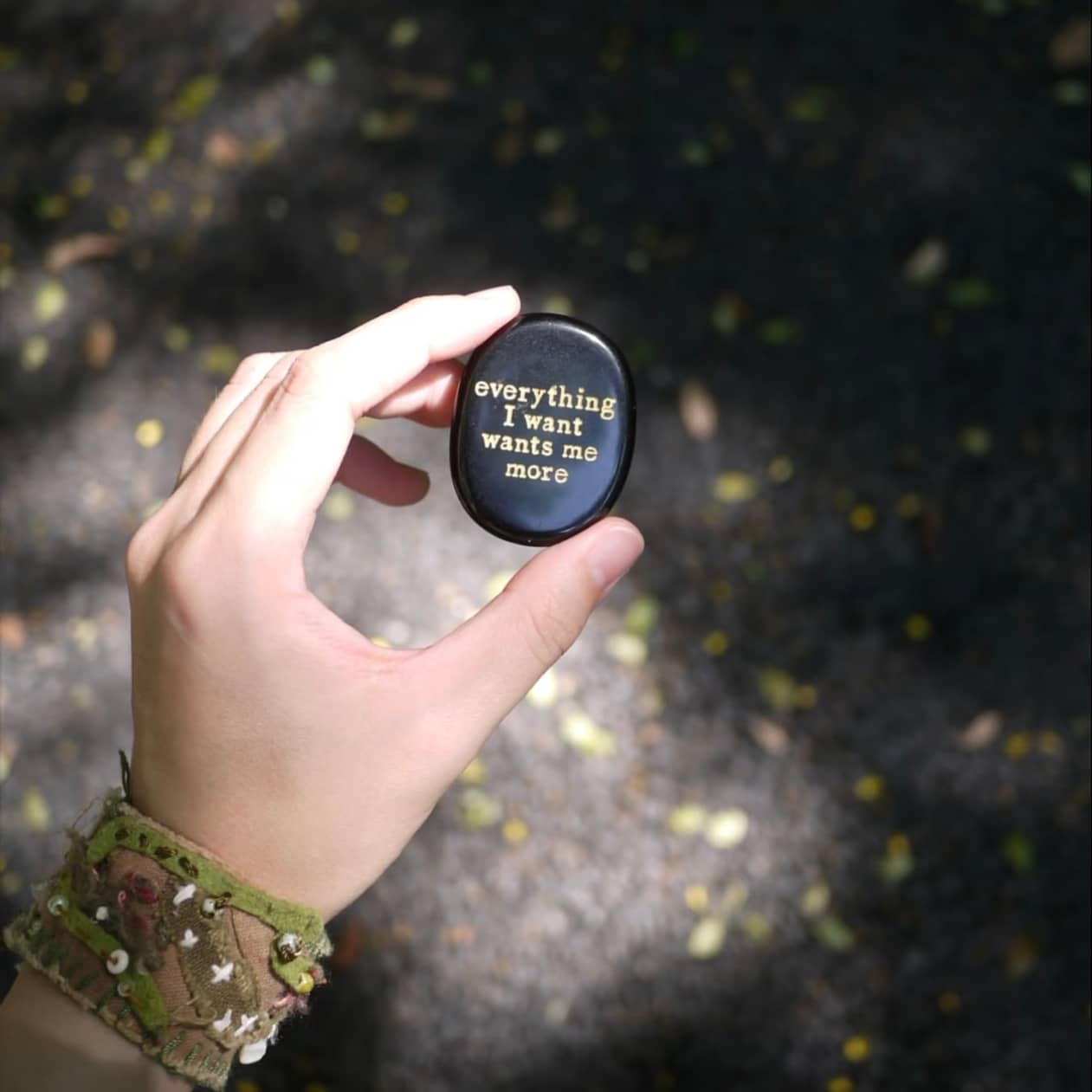 9. Black Worry Stone Meaning
Black is one of the strongest symbolic colors for grounding, protection, and emotional stability. Many people choose black worry stones when they want something that feels solid, quiet, and dependable during stressful times.
- Symbolizes: Grounding, strength, protection, boundaries.
- Best for: Staying centered, emotional resilience, stability.
- Why people choose it: Black often feels like an anchor—simple, strong, and calm.
10. Red Worry Stone Meaning
Red is associated with vitality, courage, energy, and action. It has a more active emotional tone than softer colors, which makes it a strong choice for people who want support with confidence, determination, and momentum.
- Symbolizes: Passion, bravery, strength, motivation.
- Best for: Confidence, action, personal power.
- Why people choose it: Red can feel like a little nudge that says, “Go on, you’ve got this.”
11. Yellow Worry Stone Meaning
Yellow is linked with joy, optimism, confidence, and positivity. It can help bring a brighter emotional tone to your day and is often chosen by people who want a worry stone that feels encouraging rather than heavy.
- Symbolizes: Happiness, optimism, self-belief, personal power.
- Best for: Positive mindset, emotional lift, confidence-building.
- Why people choose it: Yellow often feels like carrying a little sunlight in your pocket.
12. Orange Worry Stone Meaning
Orange combines warmth, creativity, movement, and emotional expression. It is often chosen by people who want support with inspiration, courage, and reconnecting to joy.
- Symbolizes: Creativity, enthusiasm, warmth, expression.
- Best for: Inspiration, motivation, emotional openness.
- Why people choose it: Orange feels energizing without shouting about it.

13. Brown Worry Stone Meaning
Brown is deeply associated with stability, earthiness, comfort, and resilience. It can feel especially grounding during stressful or uncertain seasons, making it a quietly supportive color for everyday use.
- Symbolizes: Stability, safety, reliability, groundedness.
- Best for: Resilience, comfort, staying present.
- Why people choose it: Brown tends to feel warm, practical, and emotionally steady.
14. How to Choose the Right Worry Stone Color
Choosing the right worry stone color is personal. There is no strict rulebook here—thankfully, because the crystal universe does not need more paperwork. The best choice usually comes down to what you need emotionally and what color feels most comforting to you.
14.1 Choose by Emotional Need
- Need calm? Choose blue.
- Need healing? Choose green.
- Need self-love? Choose pink.
- Need clarity? Choose white or clear.
- Need grounding? Choose black or brown.
- Need confidence? Choose red or yellow.
- Need inspiration? Choose orange.
- Need reflection? Choose purple.
14.2 Choose by Intention
Some people use a worry stone as a daily symbol of an intention. In that case, choose the color that reflects the state you want to cultivate, not just the mood you are currently in.
- “I want to feel more peaceful.” → Blue
- “I want to start fresh.” → Green
- “I want to be kinder to myself.” → Pink
- “I want to stay grounded.” → Black
- “I want to trust my intuition.” → Purple
14.3 Choose Intuitively
Sometimes a certain color simply stands out to you. That instinct matters. If you keep returning to the same stone, that emotional response may be more meaningful than any chart.
15. Best Worry Stone Colors for Different Intentions
If you want a quicker way to choose, this intention-based guide can help.
| Intention | Recommended Colors |
|---|---|
| Anxiety relief | Blue, black, brown |
| Healing | Green, pink |
| Self-love | Pink |
| Grounding | Black, brown |
| Clarity | White, clear, purple |
| Confidence | Red, yellow |
| Positivity | Yellow, orange |
| Creativity | Orange |
| Spiritual reflection | Purple |
| Fresh starts | Green, white |
16. Are Worry Stone Color Meanings Spiritual or Symbolic?
For some people, worry stone colors carry spiritual meaning. For others, the meanings are more emotional, psychological, or symbolic. Either way, the effect can still be very real on a personal level.
If you associate blue with calm, carrying a blue worry stone may help reinforce that feeling. If black helps you feel protected and steady, that symbolism itself can be grounding. In other words, the stone does not need to pass a lab test in emotional support engineering to matter—it works through touch, intention, repetition, and meaning.
- Spiritual view: Colors reflect energy, chakras, or metaphysical qualities.
- Symbolic view: Colors reinforce mindset, emotion, and personal ritual.
- Shared truth: Meaning grows through the relationship you build with the stone.
17. Worry Stones as Meaningful Gifts
Worry stones can also make thoughtful, personal gifts. Their small size makes them easy to give, but their symbolic meaning can make them feel surprisingly intimate and supportive.
- Blue for someone going through stress or anxiety.
- Pink for emotional comfort, compassion, or self-love.
- Green for healing, growth, or new beginnings.
- Black for strength, grounding, and resilience.
- Yellow for encouragement, positivity, and confidence.
When given with intention, a worry stone becomes more than a pretty object. It becomes a small reminder that someone is supported and cared for.
18. FAQ About Worry Stone Color Meanings
What color worry stone is best for anxiety?
Blue is one of the most common choices because it is associated with calm and peace. Black and brown are also popular for grounding and emotional stability.
What does a green worry stone mean?
A green worry stone usually symbolizes healing, growth, balance, and renewal. It is often chosen during periods of emotional recovery or life transition.
What does a pink worry stone mean?
Pink is commonly associated with compassion, tenderness, emotional care, and self-love. It is a popular choice for comfort and gentleness.
Is black a good color for a worry stone?
Yes. Black is often associated with grounding, protection, and strength. Many people find it especially helpful during stressful or uncertain times.
How do I choose the right worry stone color?
You can choose based on emotional need, symbolic meaning, personal intention, or simple intuition. The best color is the one that feels most supportive to you.
Do worry stone colors really matter?
They matter in a personal and symbolic sense. The color can deepen your connection to the stone and strengthen the intention or emotional meaning you attach to it.
Conclusion: Choosing by Meaning and Feeling
Understanding worry stone color meanings can help you choose a stone that feels more personal, supportive, and aligned with your emotional needs. Whether you are drawn to blue for calm, green for healing, pink for gentleness, black for grounding, or yellow for encouragement, each color carries its own emotional tone.
In the end, the best worry stone color is not always the one with the “perfect” symbolic meaning. It is the one that helps you pause, breathe, and come back to yourself—preferably without overthinking it for three business days.
A small stone, the right color, and a quiet moment of intention can go a long way.
References (General / Non-medical)
- Hall, J. (2003). The Crystal Bible: A Definitive Guide to Crystals. Godsfield Press.
- Hall, J. (2004). The Encyclopedia of Crystals. Godsfield Press.
- Melody. (1995). Love Is in the Earth: A Kaleidoscope of Crystals. Earth-Love Publishing House.
- Simmons, R., & Ahsian, N. (2007). The Book of Stones: Who They Are & What They Teach. North Atlantic Books.
- Eason, C. (2003). Healing Crystals. Sterling Publishing.


